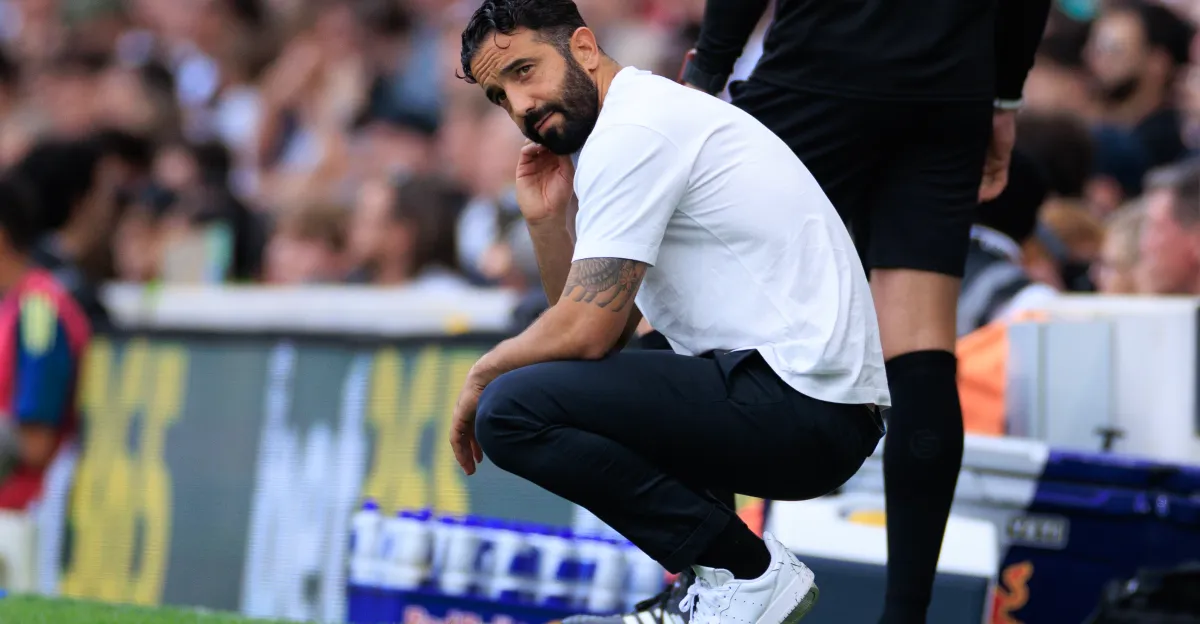
A rigid system in a volatile environment is turning United into a bomb club not a bomb squad
Amorim has inherited, then doubled down on instability. United have gone three straight windows investing in “development” No.9 profiles: Rasmus Højlund in 2023, Joshua Zirkzee in 2024, and now Benjamin Šeško in 2025, while also adding Bryan Mbeumo and Matheus Cunha to remake the attack. That’s £200m+ this summer alone for Mbeumo (£70m), Cunha (£62.5m), and Šeško (up to ~£73.7m). ESPN.com+2ESPN.com+2The Guardian
The idea: accelerate a vertical, pressing 3-2-5/3-4-2-1. The reality: two league matches, one point, and a cup exit to League Two Grimsby on penalties. The problem isn’t courage in the motivational sense; it’s tactical courage; the willingness to bend the blueprint when the game demands it. Right now, Amorim isn’t bending.
Match Evidence: Arsenal 1–0 and Fulham 1–1 show the same structural leaks
What the tape and numbers say:
Arsenal at Old Trafford (Aug 17, 2025)
- xG: United 1.33 vs Arsenal 1.38
- Shots: United 9 vs Arsenal 22
- PPDA (lower = more intense press): United 7.90 vs Arsenal 13.45
United pressed fairly well but were territorially overwhelmed and out-shot 22–9. The 0–1 felt less like bad luck and more like a team that couldn’t scale possession or chance volume once behind.
Fulham at Craven Cottage (Aug 24, 2025)
- xG: Fulham 1.65 vs United 1.55
- Shots: Fulham 13 vs United 10
- PPDA: United 10.89 vs Fulham 9.93
United led 1–0, then sank into a passive 5-2-3, conceded territory, and were pegged back by an Iwobi → Smith Rowe combo. Bruno Fernandes missed a first-half penalty. This was a toss-up on xG, but the game-state management collapsed.
The Systemic Diagnosis: Why the 3-4-2-1 keeps turning passiv
1: Vertical stretch under pressure
On team sheet it’s a back three; under stress it becomes a back five with big gaps to the front line. United’s wing-backs get pinned, the “box” midfield flattens, and opponents access half-spaces and switches—exactly how Fulham grew after the break. The Understat event maps and PPDA illustrate the drop in access to the ball once United led.
2: Pressing asymmetry
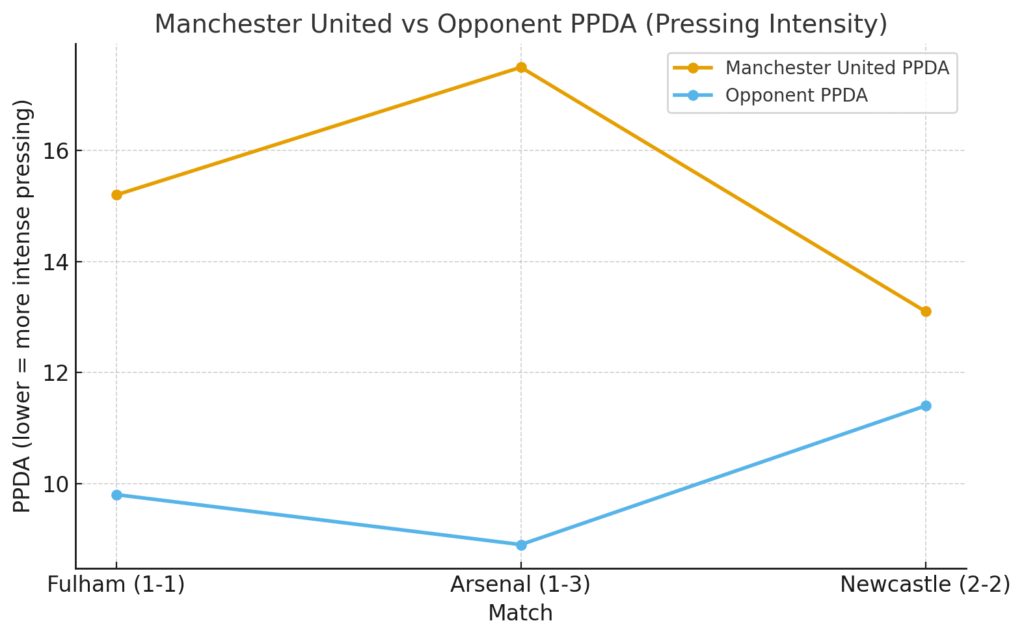
The PPDA split tells you United’s press wasn’t synchronized at Fulham (10.89 is mid-table intensity). At Arsenal it was sharper (7.90) but couldn’t translate into shot volume or territory. A high press that doesn’t connect to compact rest-defence just creates longer defensive transitions.
3: Chance creation profile mismatch
Šeško wants early depth runs, Mbeumo lives on far-post diagonals and half-space carries, Cunha links between lines. Those patterns are doable—but only if the back five doesn’t retreat and the double-10s can pin and bounce. The shot totals and xG tell you United aren’t getting enough repeatable touches into those zones yet. ESPN.com+1The Guardian
The Human Factor: Courage vs stubbornness
Amorim keeps signalling he won’t move off the core structure. That’s where the “lacks balls” critique lands: bravery here would be proactive adjustment—compressing lines when leading, flipping to a 4-3-3/4-2-3-1 to regain midfield access, or staggering one wing-back deeper to keep the rest-defence intact. The best managers flex the shape to the game state. Right now, United are rigid when flexibility would be braver.
Instability Off The Pitch: From development 9s to a forward exodus
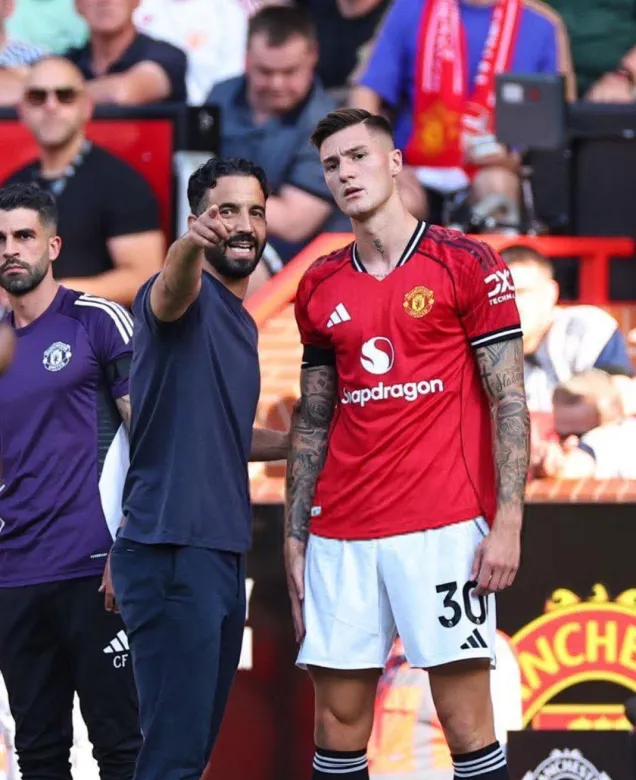
- Three consecutive “development” 9s: Højlund (2023), Zirkzee (2024, ~£36.5m), Šeško (2025, up to ~£73.7m). United keep onboarding potential rather than peak. Sky SportsThe Guardian
- This summer’s outflow signals:
- Rashford registered by Barcelona and already debuting.
- Højlund → Napoli talks active.
- Garnacho → Chelsea moving toward £35–40m.
These aren’t academy loans; they’re core-talent exits circling an uncertain project, and they strip the squad of known outputs and identity. Yahoo Sports+2Yahoo Sports+2We Ain't Got No History
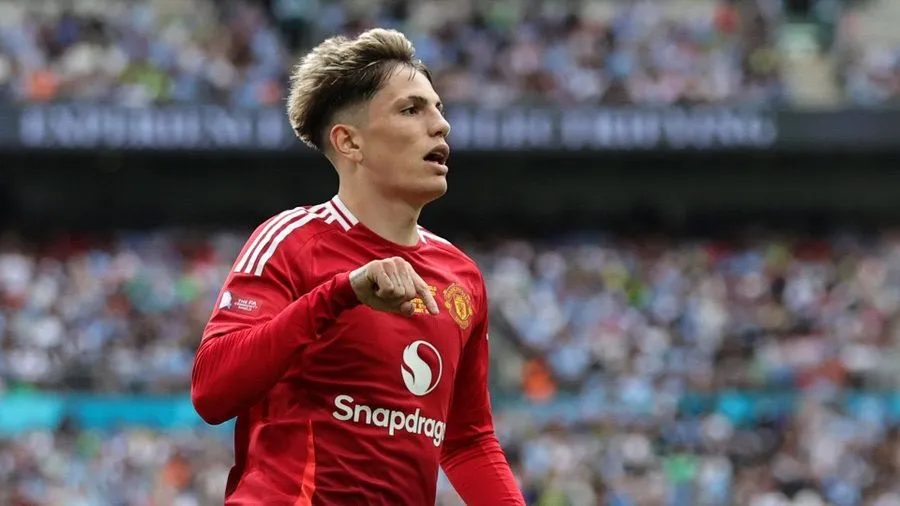
Garnacho context: 2023/24 delivered double-digit goal contributions; 2024/25 in the league he logged 6G+2A, with career totals at United reported as 26G and 22A. Selling a 21-year-old academy winger who “never hid” for ~£35–40m is poor value amid chaos. Manchester UnitedStatMuseTalkSport
The Grimsby Red Flag: Process under pressure
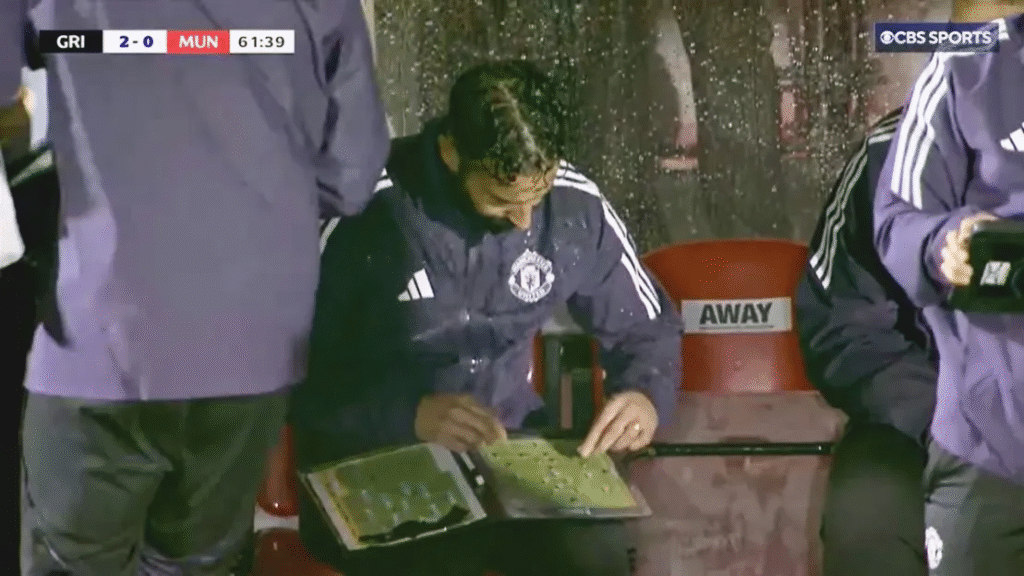
Manchester United’s Carabao Cup humiliation came at the hands of League Two side Grimsby Town, ending 2–2 after 90 minutes before a marathon shootout finished 12–11. The penalty chaos underlined deeper problems: United’s new-look forward line shrank under the spotlight. Benjamin Šeško, signed for over £70m and billed as the leader of the next generation, stepped up only for the tenth spot-kick—a strange optic for a striker meant to set the tone.
What Needs To Change: Concrete, coachable fixes
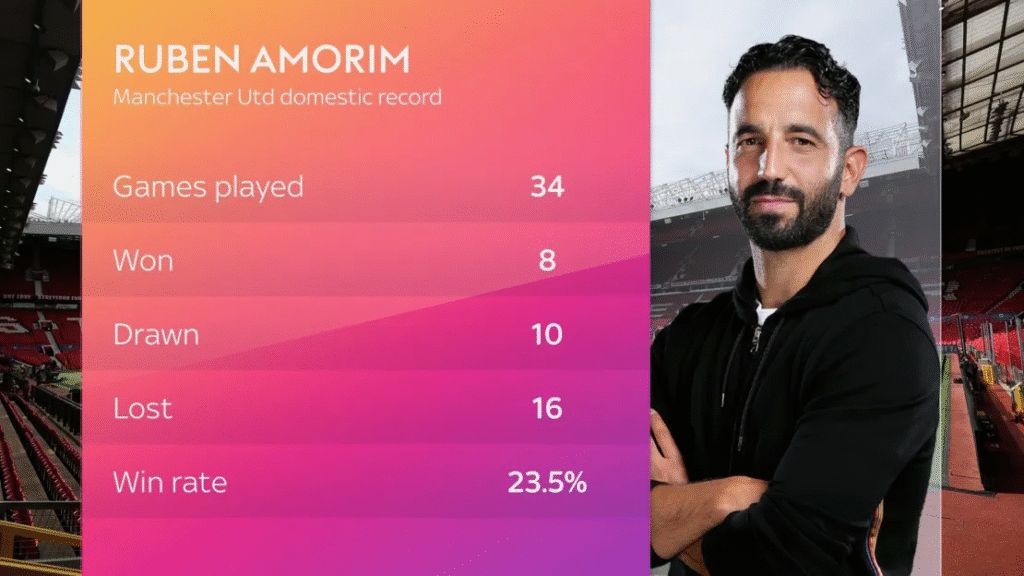
Compress the block late in games: Keep the front five connected by dropping a 10 to form a 3-3 rest-defence and prevent the slide into a passive 5-2-3. You can see from Fulham’s PPDA and shot trend when United lost access.
Codify three A-to-B patterns to feed the new front line:
- Early diagonal into Šeško stride with strong-side 10 arriving second phase.
- Far-post isolation for Mbeumo from weak-side wing-back switches.
- Wall-pass triangles with Cunha to release an underlap. The signings justify these patterns; the current data shows they aren’t repeatable yet. ESPN.com+1
Pressing triggers: Standardize the first jump (ball near CB), the cover shadow from the near 10, and the starting height of the ball-far winger. Arsenal’s match PPDA shows United can press; Fulham shows they can’t sustain it across game states.
Penalty order leadership: Put your best two takers in the first three. The Grimsby shootout optics matter for dressing-room hierarchy and public confidence. Premier League
Bottom Line: Can Amorim learn fast enough
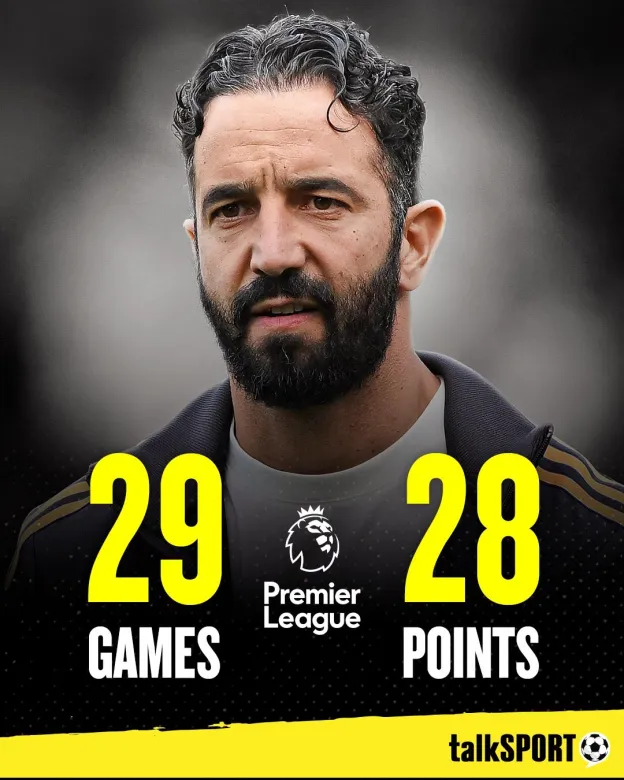
United’s early-season sample is small but loud. The xG is close, the shots against are heavy, and the press evaporates when protecting a lead. That isn’t just bad luck; it’s structure. Amorim can absolutely learn—managers are human—but right now it looks too big and too rigid for the moment. Courage here means adaptation, not defiance.
Leave a Reply