Category: Football

  • When We Seek Perfection in Imperfect Lives: Why Arsenal’s Strategy Hits Home (Part 1)

    When We Seek Perfection in Imperfect Lives: Why Arsenal’s Strategy Hits Home (Part 1)

    We all know life isn’t perfect, bills pile up, deadlines loom, relationships need work. And yet, on match day, when your team doesn’t start fast or falters for a few weeks, it’s easy to demand perfection. That’s exactly why we’re fans. We crave it. But life, and football rarely give it to us. Emotional reactions are understandable, but decision-makers have to build with reality, patience, and resources, not feelings.

    That’s the backdrop for Arsenal’s 2025/26 season. Their story isn’t built on emotional highs or reckless spending. It’s built on consistency, smart planning, and purposeful moves. And the results show it.

    From 8th to Three Successive Runner-Up Finishes

    In just four seasons under Mikel Arteta, Arsenal went from 8th-place finishes in 2020–21 and 2021–22 to three back-to-back second-place finishes from 2022–23 through 2024–25 (Transfermarkt, Wikipedia).


    A Point Collection That Sustains Ambition

    • 2022–23: 84 points (2nd) (Wikipedia)
    • 2023–24: 89 points (2nd) — Arsenal’s second-highest ever (Wikipedia)
    • 2024–25: 74 points (2nd), despite disruptions (Wikipedia)

    That adds up to 247 points in three seasons; just four points shy of Manchester City’s 251, and well ahead of Liverpool’s 233 (The Sun). The engine isn’t broken, it’s performing.


    Kicking Off 2025/26 with Purpose

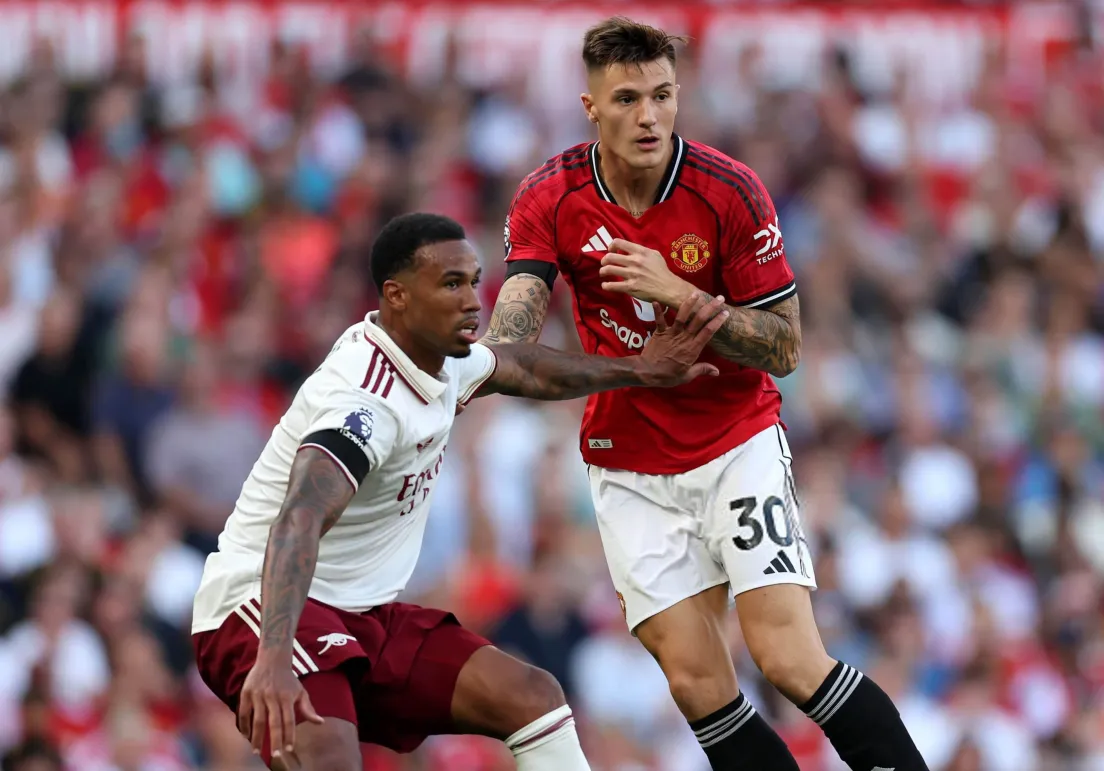
    The new season has barely begun, and Arsenal made a statement with a win at Old Trafford. That result shortened their title odds from 5/4 to 2/1 (TalkSport). Pressure is higher than ever; legend Martin Keown’s expectation is simple: it’s time to deliver silverware. (TalkSport)


    Why This Phase Really Matters

    This isn’t emotional football. It’s strategic:

    • Consistency over flashes
    • Recruitment, not spectacle
    • Culture over individual brilliance

    We live imperfectly; but to build something lasting, especially in football, you must plan, be patient, and stay grounded.


    Coming Up in Part 2: Recruitment as the Foundation

    Next up, I’ll dive into why this summer’s transfer window wasn’t about headlines; it was about precise, purposeful reinforcements.


  • Real Madrid Off to Winning Start: Match Review – Real Madrid vs Osasuna

    Real Madrid Off to Winning Start: Match Review – Real Madrid vs Osasuna

    Real Madrid kicked off their La Liga 2025/26 campaign with a narrow but vital win over Osasuna on August 19, 2025, at the Santiago Bernabéu. The match ended Real Madrid 1 – 0 Osasuna, giving Los Blancos a positive start to the new season.


    Match Highlights

    • Dominance in possession: Real Madrid controlled 70% of the ball, dictating the tempo from start to finish.
    • Shots on target: Madrid registered 5 attempts on target, while Osasuna failed to test the goalkeeper with a single shot on goal.
    • La Liga context: This clash marked part of the 2025/26 La Liga season, which runs from August 15, 2025, to May 24, 2026.

    Man of the Match

    Kylian Mbappé proved decisive on his league debut at the Bernabéu. The French superstar won a crucial penalty and converted it with confidence, sealing all three points for Real Madrid.


    Recent Head-to-Head

    • November 9, 2024 – Real Madrid 4-0 Osasuna
      • Vinícius Júnior scored a brilliant hat-trick.
      • Jude Bellingham added a goal to complete the rout.
  • Alexander Isak vs Newcastle: The Saga That Won’t Go Away

    Alexander Isak vs Newcastle: The Saga That Won’t Go Away

    The tension between Alexander Isak and Newcastle United has erupted into one of the most dramatic storylines of the summer transfer window.

    On Tuesday, August 20, 2025, the Swedish striker finally broke his silence, citing “broken promises” as the reason he no longer wishes to continue at St James’ Park.

    Liverpool remain strongly interested in the 25-year-old and already tested Newcastle’s resolve with a £110 million bid, swiftly rejected by the Magpies.

    This saga has been brewing for weeks. Isak refused to join Newcastle’s pre-season tour and sat out their Premier League opener against Aston Villa last weekend. Reports now suggest he has told the club he will never play for them again — a dramatic stance that has left supporters bitterly divided.


    Isak’s Statement

    Speaking at the PFA Awards in London, where he was named in the Premier League Team of the Season, Isak explained his position:

    “I’ve kept quiet for a long time while others have spoken. That silence has allowed people to push their own version of events, even though they know it doesn’t reflect what was really said and agreed behind closed doors. When promises are broken and trust is lost, the relationship can’t continue.”

    It was a rare and candid public outburst from a forward usually praised for keeping his head down.


    Newcastle’s Response

    Hours later, Newcastle issued a strong rebuttal, stressing that Isak remains under contract and that no exit clauses or promises had been made.

    “We want to keep our best players, but we also understand players have their own wishes. The conditions of a sale this summer have not transpired, and we do not foresee them being met. Alexander remains part of our family and will be welcomed back when he is ready.”

    The statement reinforced the Magpies’ determination to hold their ground.


    What’s Next?

    With both sides firmly entrenched, the standoff has escalated into a full-blown transfer saga. Liverpool remain keen, Isak is resolute about leaving, and Newcastle are refusing to budge — at least for now.

    As the transfer window ticks down, one thing is clear: this story is far from over.

  • Benjamin Šeško: A Flower Waiting to Bloom

    Benjamin Šeško: A Flower Waiting to Bloom

    Too often, young players are dismissed prematurely because of superficial numbers. We’ve seen this pattern repeat itself time and time again. Years back, people were quick to call Alexander Isak a flop because he only scored six goals in a particular season. What they missed was the bigger picture — his movement, technical quality, and potential were clear. Fast forward to today, Isak is one of the most complete forwards in the Premier League.

    Now that same short-sighted analysis is being applied to Benjamin Šeško. The narrative goes: “he’s not good enough” or “he hasn’t proven anything yet.” But here’s the truth — Šeško has already scored over 120 career goals across club and international football by the age of 21. Just last season (2024/25), he hit 18 goals for RB Leipzig in all competitions, in a side that wasn’t always firing in attack. Despite the circumstances, he showed remarkable progress in his positioning, decision-making, and composure in front of goal.

    Performance vs Results

    This brings us to a crucial distinction: performance-based analysis vs result-based analysis.

    • Result-based analysis only cares about the outcome — goals, assists, wins. It rarely asks how those outcomes were achieved or what limited them.
    • Performance-based analysis digs deeper. It looks at a player’s off-the-ball runs, link-up play, pressing, chance creation, and decision-making.

    When you’re evaluating a young striker like Šeško, performance-based analysis matters more. Because the question isn’t “what is he today?” The question is: “what could he become at 25 or 26 with the right development path?” That requires nuance and foresight, not just stat-checking.

    The Mental Side of the Game

    Talent is nothing without the mentality to match it. Not every young player can carry the weight of expectation, adapt to tactical shifts, or stay sharp when the goals aren’t flowing.

    Šeško has already shown mental resilience. He’s competed in top leagues, faced pressure at international level, and continued improving despite not always being in the most favorable setups. That kind of character is what separates long-term professionals from short-term hype.

    The Gyökeres Comparison Trap

    Some critics are already comparing Šeško unfavorably to Viktor Gyökeres. But let’s rewind. At 21, Gyökeres was still finding his feet in the lower tiers of English football. Nobody was calling him elite. Today, he’s thriving because he found the right system and steady development path.

    So why deny Šeško that same grace? In fact, you could argue he’s ahead of where Gyökeres was at the same age.

    A Cameo Worth Noting

    Sunday against Arsenal, Šeško made a short cameo, but even in those few minutes you could see flashes — the movement, the physicality, the hunger to make an impact. It was only a glimpse, but it’s a reminder: growth takes time, and development isn’t linear.

    Not every appearance will be a headline. Sometimes, it’s just about planting seeds.

    Final Word

    Šeško has the physical tools, technical skill, and mental strength to become elite. What matters now is time, patience, and the right environment. He doesn’t need to be the finished article today. What matters is what he can become.

    So yes, support Isak. Celebrate Gyökeres. But stop using one player’s rise as an excuse to bury another’s potential. That mindset does nothing but fuel toxic discourse.

    Šeško may just be a flower waiting to bloom. Yesterday’s cameo was just a smile at what could be ahead. Give him time, and he might just surprise everyone.

  • Alexander Isak Transfer Watch: Liverpool Circling Newcastle Star

    Alexander Isak Transfer Watch: Liverpool Circling Newcastle Star

    Alexander Isak’s future is quickly becoming one of the biggest talking points of the transfer window.

    The Swedish forward, currently leading the line for Newcastle United in the No. 14 shirt, has been linked with a potential move to Liverpool. Despite already securing Hugo Ekitike for a hefty fee this summer, Liverpool are reportedly keen to add more firepower up front — and Isak’s name is at the top of their list.

    For Newcastle, Isak remains a vital piece of their project. His sharp movement, clinical finishing, and growing consistency in the Premier League have made him one of the league’s most desirable strikers. In the early stages of the 25/26 campaign, he has continued to show his importance, with his presence evident even in hard-fought games like the recent 0-0 draw against Aston Villa.

    At this stage, nothing is concrete. Newcastle are expected to fight hard to keep their star, while Liverpool’s pursuit signals serious intent. The question remains: will Isak stay and lead Newcastle’s charge, or will he be tempted by a move to Anfield and the chance to spearhead Slot’s new-look attack?

    For now, all eyes are on St. James’ Park. The saga is only just beginning.

  • Football Is a Team Sport: Different Profiles Build Great Teams

    Football Is a Team Sport: Different Profiles Build Great Teams

    When we were younger, football felt so simple. On the playground, roles came naturally. The fastest kids went to the wing. The ones who could dribble got the ball more. The big and strong ones defended. The kid with the thunderous shot stayed up front.

    Everyone had a profile. Everyone had a role.

    So why, as fans, have we grown up and forgotten this? Why do we now criticize professional players for not being “complete” when even the best teams are built on different profiles working together?

    The truth is, elite football isn’t about having 11 flawless players. It’s about balance. A team needs variety:

    • The dribbler who pulls defenders out of shape.
    • The runner who stretches the pitch and presses.
    • The playmaker with vision and finesse.
    • The striker who might lack a silky touch but finishes ruthlessly.
    • The defender who organizes and refuses to be beaten.

    Not every player has to excel at everything. Even at the top level, strengths and weaknesses coexist. Team construction is an art — the puzzle is completed with pieces that are imperfect but purposeful.

    Look at Manchester City. The side that dominated under Pep Guardiola thrived because of its mix of profiles. Raheem Sterling wasn’t the cleanest technician, but he stretched defenses. Fernandinho, never flashy, controlled transitions with his positioning and tactical fouls. Gabriel Jesus wasn’t the most clinical, but his pressing and link-up play were invaluable. Then you had elite creators like Kevin De Bruyne and David Silva, plus lethal finishers like Leroy Sané.

    That balance made them nearly unstoppable. But in the 2023–24 season, cracks showed as some profiles weren’t replaced. Without Sterling or Mahrez, City lost 1v1 threat on the wings. Without Jesus, they lacked chaos and pressing energy up front. The system became more predictable — not because individuals got worse, but because the variety of profiles shrank.

    This is the bigger picture: football isn’t about 11 identical players. It’s about profiles that complement each other. Teams need runners, creators, destroyers, leaders, and specialists.

    That’s what makes football the ultimate team sport.