Another season, another pile-up of VAR flashpoints. Through just a few weeks of the 2025/26 Premier League campaign, we’ve already seen decisions that shaped results, reignited old debates, and reminded everyone that technology still doesn’t erase human judgment.
So what exactly has gone wrong this season? And are things improving—or just getting worse?
2025/26: Controversies Already on the Board
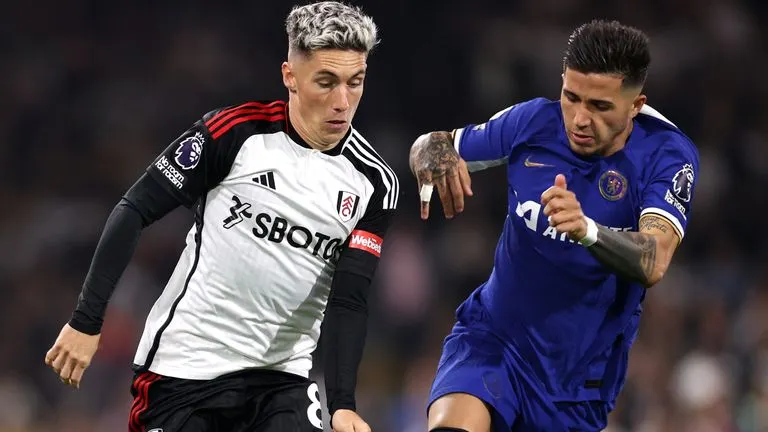
Chelsea vs Fulham (Aug 30, 2025)
Josh King’s goal disallowed
Twenty-one minutes in, Fulham’s teenage forward Josh King thought he had scored his first senior goal. VAR intervened, ruling it out for a supposed “careless challenge” by Rodrigo Muniz on Chelsea’s Trevoh Chalobah. Fulham boss Marco Silva branded the decision “unbelievable” (The Guardian, TalkSport).
Referees’ chief calls it wrong
Howard Webb, head of refereeing, later admitted VAR’s intervention was a mistake, saying the minimal contact didn’t meet the “clear and obvious” threshold.
VAR official reassigned
VAR referee Michael Salisbury was dropped from his next assignment—a rare show of accountability.
Chelsea awarded a dubious penalty
In the second half, VAR gave Chelsea a penalty for a Ryan Sessegnon handball, which Enzo Fernández converted. Critics pointed out that an earlier João Pedro handball in the same sequence had gone unpunished.
Why fans are furious
- A teenager’s dream debut goal was wiped out.
- Webb’s “clear and obvious” admission undermined confidence in VAR.
- Inconsistent handball decisions fueled claims of double standards.
Chelsea vs Crystal Palace (Early Season)
A Palace free-kick was chalked off after VAR flagged an attacking player’s positioning in Chelsea’s defensive wall. Technically correct, but it left fans debating rules instead of football—echoing the Chelsea–Fulham narrative.
A Quick Rewind: Signature VAR Errors from Recent Seasons
- Tottenham vs Liverpool (Sept 30, 2023)
Luis Díaz’s perfectly legal goal was ruled offside due to a VAR communication breakdown. The league later admitted it was a “significant human error.” - Manchester United vs Wolves (Aug 14, 2023)
André Onana clattered into Sasa Kalajdzic in stoppage time. No penalty was given, but refereeing chiefs admitted afterward that Wolves should have had one. - Arsenal vs Brentford (Feb 11, 2023)
VAR failed to draw the offside lines, allowing Brentford’s equaliser to stand. Arsenal dropped points in a title race where every margin mattered. - Nottingham Forest vs Everton (Apr 21, 2024)
Forest had three penalty appeals turned down. A review panel later judged at least one as a clear error.
Why These Keep Happening
Subjective vs objective calls
VAR works best on factual checks like offsides and mistaken identity. It struggles with “soft” decisions—penalties, reds, contact thresholds—where interpretation varies.
Communication & process
Spurs–Liverpool 2023 showed how poor communication can sink the system. The league now releases audio for some incidents, but slow reactions erode trust.
Law vs match feel
Technical infringements (like wall positioning) may be correct on paper, but fans feel robbed of the spectacle. Football risks looking over-officiated.
Is It Getting Better?
To be fair, VAR has corrected plenty of wrong calls. Factual errors trend lower than in the pre-VAR era. But the mistakes that stick—the Díaz offside, King’s disallowed goal—are the ones that swing matches, define seasons, and dominate headlines.
And in 2025/26, we’re again talking more about processes than play.
So, Blessing or Curse?
Right now, it’s both. When VAR supports a clear, consistent process, it’s a safety net. But when thresholds are fuzzy, communication breaks down, or law interpretation trumps match flow, it’s a lightning rod for controversy.
What needs fixing:
- Publish audio and explanations for key incidents faster.
- Refine the “clear and obvious” bar so 50/50s aren’t re-refereed.
- Reassess laws around set-piece walls and handball consistency.
- Train officials in communication and game management, not just tech.
Until then, expect more weekends like Chelsea–Fulham: technically explainable, publicly infuriating, and another reminder that VAR doesn’t remove human error—it only shifts where it lives.